
P0087 Code: Low Fuel Rail Pressure and Diagnostic Limits
Contents
P0087 means fuel rail or system pressure is too low. Use professional diagnosis before assuming the high-pressure pump has failed.
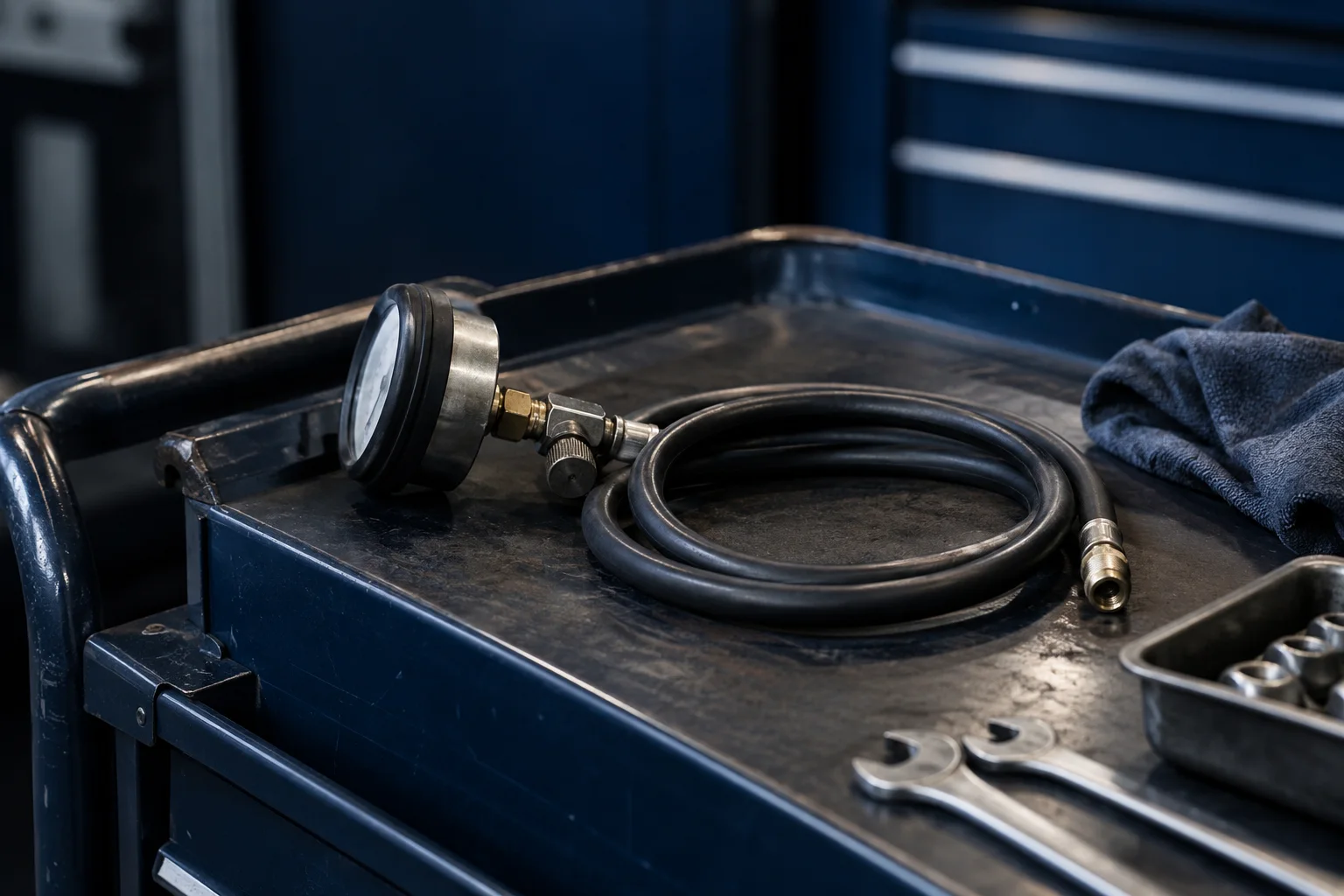
OBD-II P0087 overview. Volkswagen bulletin 23 14 03 is a 2009–2014 TDI common-rail example, not a procedure for every petrol or diesel engine.
Do not loosen high-pressure fuel pipes or open a pump to inspect it. Arrange assistance for stalling, unsafe loss of power or visible fuel leakage.
P0087 means fuel rail or system pressure is too low
P0087 identifies a low fuel rail or system pressure result. It does not name a failed high-pressure pump. Before buying a component, establish the vehicle, engine and diagnostic procedure that apply to the stored code.
Keep the full wording from the scan tool. Volkswagen's TDI technical bulletin distinguishes P0087 from P0088, which concerns excessive pressure, and P0191, which concerns fuel-pressure sensor range or performance. These are different findings even though they involve the same broad system. If several are present, retain all of them for diagnosis.
Why the pump should not be condemned from the code
The Volkswagen document covers 2009–2014 TDI common-rail applications. It describes a pump inspection for metal particles only after other components and the guided diagnostic procedures have been checked without finding a cause. Its order matters: the document does not say that every P0087 should begin with pump removal.
That example also has limits. It is not a petrol-engine repair procedure, and it is not authority to use the same inspection on another manufacturer's diesel. A similar code does not establish identical equipment, operating pressure or component access. Ask the workshop to confirm the engine and current service information before applying a bulletin.
Describe how the problem affects the vehicle
A useful report includes what the engine actually did when the warning appeared. The cited Volkswagen condition includes no-start and rough-running complaints, but those symptoms should not be assumed to exist on your vehicle. Record your own observations accurately.
- Did the engine fail to start, start normally or take longer than usual?
- Did the warning appear while idling, accelerating or driving steadily?
- Was there a noticeable loss of power, uneven running or another dashboard warning?
- Had fuel-system work or refuelling occurred shortly beforehand?
Avoid repeated starting attempts or road tests merely to generate a more detailed description. If power delivery or engine operation makes driving unsafe, move to a safe place if possible and arrange assistance. A generic code page cannot establish a safe distance to keep driving.
Save scan data and relevant history
Photograph the scan results before clearing anything. If the reader offers freeze-frame information, save that with the codes and their status. Give the workshop the engine identification, mileage and relevant maintenance invoices, especially for previous work in the fuel system.
Mention the timing of a recent fuel stop or repair as history, not as a diagnosis of contaminated fuel or incorrect workmanship. Those conclusions require evidence. Likewise, an earlier pump replacement does not prove that the current warning has the same cause. Keeping dates and symptoms separate from assumptions helps prevent the investigation from starting with the wrong premise.
High-pressure connections are not an owner test
Do not loosen a fuel pipe to see whether fuel emerges, open the rail or remove a metering valve following a generic video. Such actions are not equivalent to a controlled pressure test and can create a serious hazard. The correct equipment and pressure-release procedure are specific to the system.
An external observation of a suspected leak should be reported without touching or disturbing the connection. If fuel is visibly leaking or there is a strong fuel smell, stop use and obtain appropriate assistance. Do not use a flame or other ignition source to inspect the area, and do not keep the engine running to locate the leak yourself.
Questions that make the repair decision clearer
Ask which diagnostic result established the low-pressure condition and which checks narrowed it to the proposed cause. If a high-pressure pump is recommended, ask how the applicable sequence was completed and what supported replacement. If contamination is reported, request the documented finding and the manufacturer's prescribed repair scope.
Afterward, ask how the original starting, running or pressure complaint was verified. A cleared warning light is only one observation; the service explanation should connect the repair to the condition that produced the code. Keep the findings with the invoice so that any recurrence can be compared with the original evidence instead of starting another round of speculative parts replacement.
Frequently asked questions
Does P0087 prove the high-pressure pump failed?
No. The cited VW diagnostic sequence checks other causes before the specified pump inspection.
Can I loosen a pipe to check fuel delivery?
Do not open high-pressure fuel connections. Use qualified service with the correct equipment.
Does the VW TDI bulletin cover petrol engines?
No. Its application is the specified TDI vehicles; petrol engines require their own procedures.
Check the original documents
Sources
- Volkswagen 23 14 03 / 2036656, March 20, 2014, page 1
P0087 definition and TDI application; Pump metal inspection only after other GFF checks, including supply and leakage
Sources checked on 2026-10-25. Follow the instructions for your exact model.