P0299 Code: Underboost Does Not Always Mean a Failed Turbo
Contents
P0299 reports underboost. Check the engine-specific diagnostic path before assuming the turbocharger needs replacing.
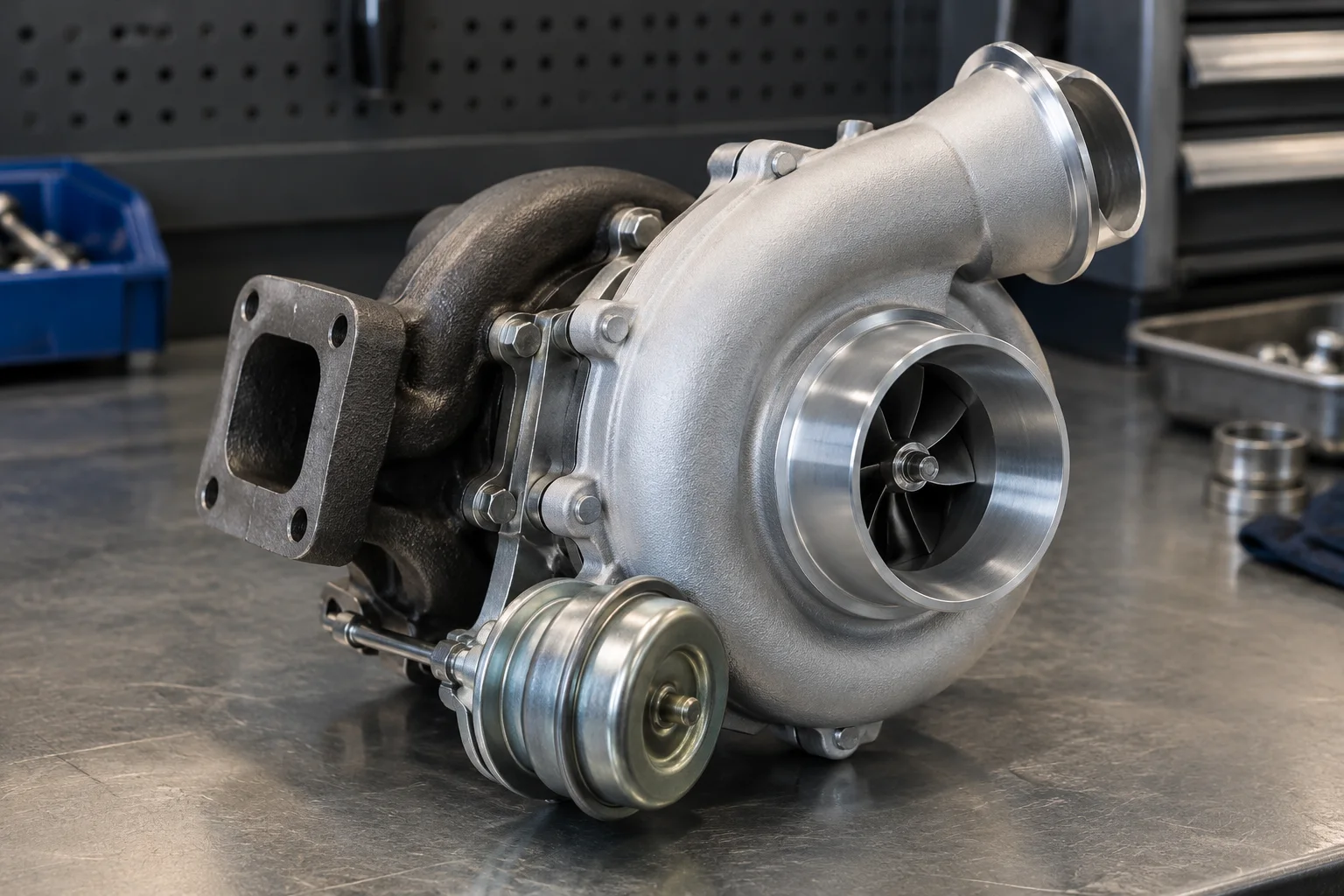
OBD-II P0299 overview. GM PIP5495M concerns listed 1.4-litre LUJ/LUV applications; boost targets and component layouts vary across engines.
Do not reproduce a loss-of-power fault with hard acceleration. Avoid hot turbocharger and exhaust components; internal and pressurised-system testing belongs to qualified service.
Underboost is a result, not a turbo verdict
P0299 means the monitored boost performance was below the expected level. It does not establish that the turbocharger assembly has failed. Preserve the full scan description and any companion codes before a repair is proposed. If P0300 is also recorded, keep the random-misfire information with the scan record rather than assuming every code has the same cause.
Note whether the complaint is a warning alone, reduced power under load or an unusual sound. Those are different observations and should not be merged into a single assumed cause.
GM specifically warns against misdiagnosis
In PIP5495M, GM discusses P0299/P0234 on listed 1.4-litre LUJ/LUV vehicles, including certain Encore, Cruze, Sonic and Trax model years. Examples include collapsed intake ducts and obstructed wastegate-control hoses. These findings do not automatically require replacement of the complete turbocharger.
Use its application table and current service information. It is not a universal test sequence for a diesel, a different petrol engine or a vehicle outside the listed range.
Ask for the comparison behind the diagnosis
GM’s documented boost-control test compares actual and desired pressure under specified conditions. A useful workshop explanation should identify which finding supports the repair. Ask whether relevant intake, boost-control and manufacturer-specific checks have been completed.
Avoid treating a generic boost number from another car as the correct limit. Conditions and calibration belong to the actual engine.
Keep recent work in the record
Report recent air-filter, intake, hose or turbo-related work and when the symptom began. Include the invoice or parts details if available.
After a repair, ask what confirms the original underboost condition has been resolved. Replacing an expensive assembly without identifying the supporting evidence leaves the central question unanswered.
Frequently asked questions
Does P0299 guarantee turbocharger failure?
No. GM’s diagnostic guidance explicitly addresses conditions that can lead to a mistaken replacement.
Can I use another engine’s boost target?
No. Use the manufacturer’s test conditions and target for the exact engine.
Should I accelerate hard to test it?
Do not provoke an unsafe loss-of-power condition. Let a workshop perform the appropriate verification.
Check the original documents
Sources
- GM PIP5495M, June 10, 2020, application and diagnostic sections
P0299 underboost and targeted checks before turbo replacement
Sources checked on 2026-10-17. Follow the instructions for your exact model.