P0171 Code: System Too Lean (Bank 1), Causes and Next Steps
Contents
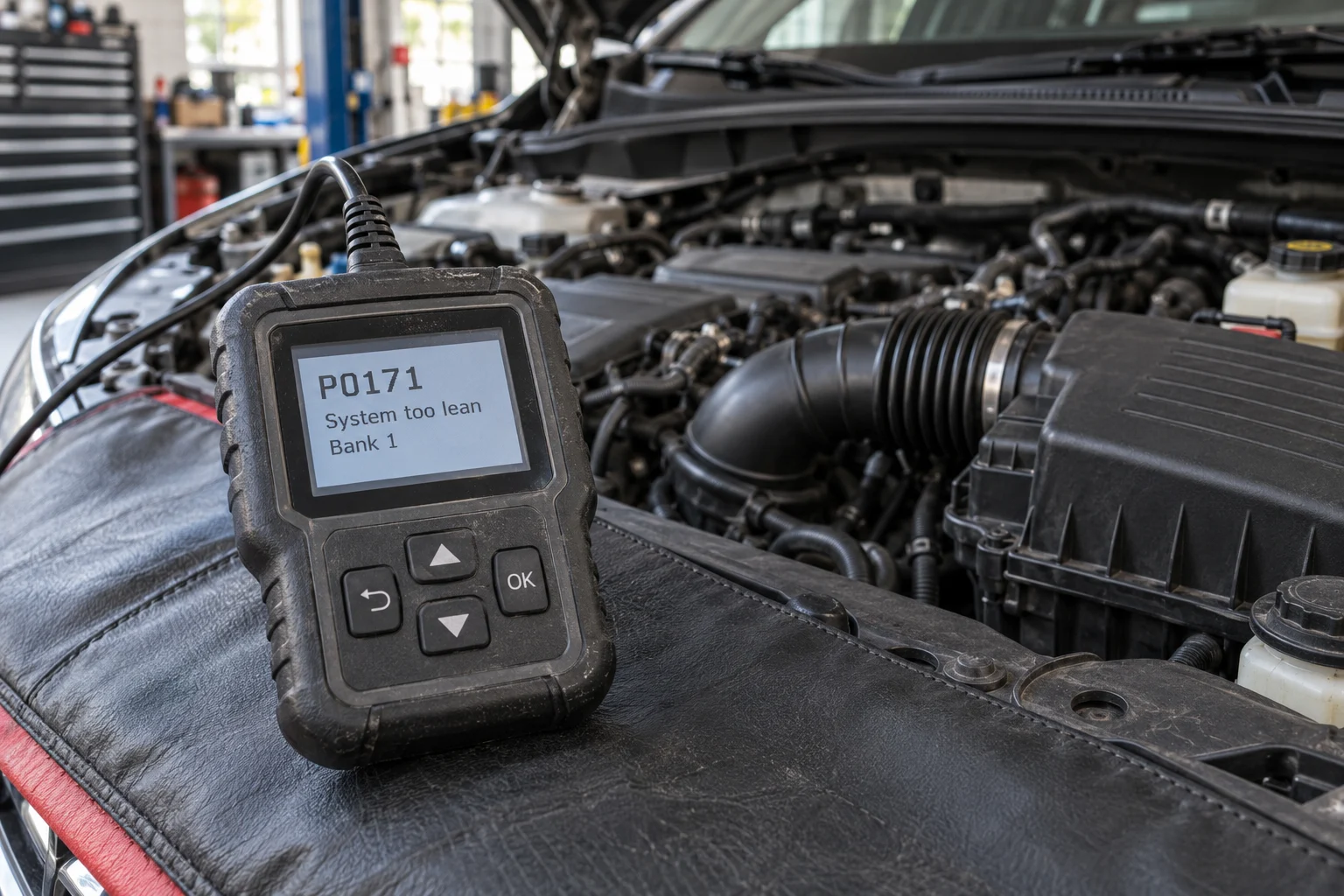
P0171 means the engine control system has detected a lean condition on Bank 1. An air leak can be responsible, but the code does not identify a failed oxygen sensor or a specific replacement part.
General orientation for gasoline vehicles reporting P0171. Ford monitor details, a DENSO Toyota case and Volkswagen technical guidance are labelled examples; test procedures and component locations depend on the engine and model year.
If the engine runs roughly, loses power or the warning light flashes, stop safely and arrange assistance. Keep clear of hot or moving engine parts. Leave running-engine measurements, smoke testing and fuel-system work to a qualified technician.
What does P0171 mean?
The description is System Too Lean, Bank 1. In plain language, the engine’s fuel-control system has detected a mixture condition with too much air relative to fuel on the monitored bank.
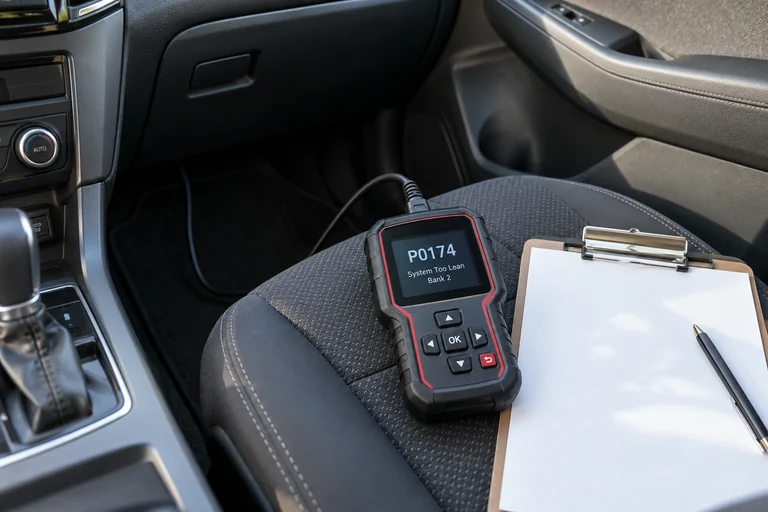
Ford’s gasoline OBD documentation places P0171 in its fuel-system monitor and associates it with fuel-trim corrections. Fuel trim is the adjustment the controller makes to fuel delivery. The document also lists P0174 for a lean condition on Bank 2. These codes describe what the monitor detected; they are not a parts diagnosis.
Use your engine’s service information to identify Bank 1. Do not infer a component’s location from the driver’s side or passenger’s side on a different vehicle.
Why an oxygen-sensor replacement may not fix it
DENSO documents a 2005 Toyota Avalon that had P0171 and P0174, rough idle and fluctuating engine speed. Replacing both air-fuel sensors did not resolve the complaint: the symptoms returned during driving.
The fault in that case was a cracked hose between the purge valve and intake manifold. Air was entering behind the air-mass meter. Repairing the hose addressed the cause. This is a useful reason to investigate the system before buying sensors, not a claim that every P0171 comes from that same hose.
Air leaks need model-specific diagnosis
An intake or related ventilation leak is one documented route to a lean warning. Volkswagen’s technical tip 01-14-01TT covers P0171 and P119A on specified 2008–2017 vehicles with CCTA or CBFA 2.0-litre engines. Its diagnostic procedure examines crankcase vacuum, breather operation and possible rear-main-seal leakage.
That Volkswagen procedure is intended for technicians using suitable equipment. It explicitly warns against applying workshop compressed air to the crankcase. Copying a smoke-test method or pressure setting from another engine can be inappropriate.
The practical next step is to match the make, year, engine code and any applicable service information before choosing a test or a repair.
What to record before the workshop visit
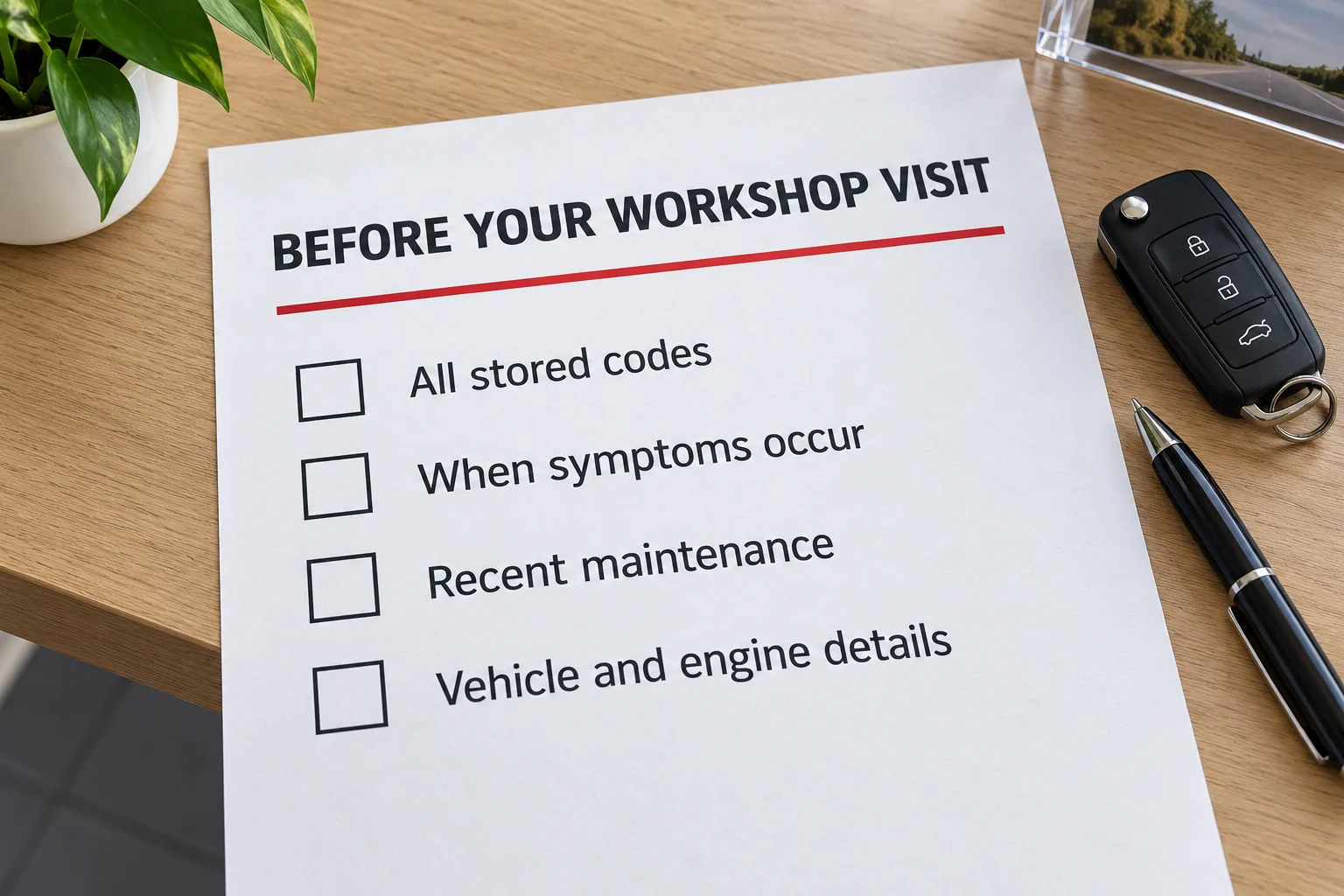
Write down all codes shown by the scanner, including whether P0174 or a misfire code is also present. Note whether the problem occurs at idle, on a cold start or during acceleration. Mention recent maintenance and any intake or hose work.
Ask the workshop to diagnose the lean condition before authorising a replacement part. A useful repair explanation identifies the test result, the confirmed fault and how operation will be checked afterward. The DENSO case illustrates why clearing codes after an unconfirmed repair can give only brief reassurance.
Keep Bank 1 and Bank 2 results identifiable
When a report includes both lean codes, keep the bank labels attached to any associated measurements. The P0174 Bank 2 explanation covers that companion result. Ask whether the technician found evidence of a shared problem or separate bank-specific findings. The presence of both codes is a reason to examine the complete system, not to buy two matching sensors.
Can you drive with a P0171 code?
The code alone cannot establish a safe driving distance. The warning light’s behaviour and the way the engine runs matter. Ford’s owner guidance says a flashing service-engine light can indicate misfire and warns of potential catalyst damage; it advises avoiding hard acceleration and arranging immediate service.
If there is severe shaking, stalling or loss of power, stop somewhere safe and arrange assistance. A steady light with apparently normal running still needs prompt diagnosis. Follow the warning instructions for your own vehicle rather than treating a steady lamp as permission to ignore the fault.
What should happen after the repair?
The technician should verify that the diagnosed fault is corrected and complete the checks required by the vehicle’s service procedure. Clearing the displayed code is only one step. In DENSO’s example, verification includes a road test after the damaged hose is replaced.
Keep the diagnostic report and repair findings. If the warning returns, that record gives the next inspection a more useful starting point than a list of parts already changed.
Frequently asked questions
Does P0171 always mean a bad oxygen sensor?
No. DENSO’s documented Toyota example had a cracked air hose even though the sensors had already been replaced. The sensor may be reporting a condition caused elsewhere. Test results should guide the repair.
What is the difference between P0171 and P0174?
The Ford OBD reference identifies P0171 as Bank 1 lean and P0174 as Bank 2 lean. When both are stored, tell the technician about both codes rather than assuming two separate sensors have failed.
Will clearing P0171 repair the problem?
Erasing the code does not repair a leak or establish why the fuel-control warning appeared. Diagnose and correct the cause, then follow the vehicle-specific verification procedure.
Check the original documents
Sources
- Ford: 2020–2023 gasoline OBD monitor summary, pages 18 and 105
P0171/P0174 definitions and fuel-monitor context; operating thresholds are model-specific.
- DENSO: P0171 returns after A/F sensor replacement
2005 Toyota Avalon case: rough idle, unsuccessful sensor replacement, cracked purge-to-intake hose and repair verification.
- Volkswagen: Technical tip 01-14-01TT
Specified 2008–2017 CCTA/CBFA engines; crankcase and breather diagnostic example and compressed-air prohibition.
- Ford owner guidance: Warning lamps
Flashing service-engine light, misfire risk, possible catalyst damage and need for immediate service.
Sources checked on 2026-10-25. Follow the instructions for your exact model.