P0455 Code: Large EVAP Leak and Vehicle-Specific Checks
Contents
P0455 is a large-leak EVAP monitor result. Check the vehicle’s filler instructions and have the sealed system diagnosed before replacing parts.

OBD-II P0455 overview. Ford monitor terminology and GM dusty-use examples are scoped to the documented systems; they do not establish a universal failed part.
Keep flames and improvised test equipment away from the fuel system. Stop using the vehicle and seek help for visible fuel leakage or a strong fuel smell.
What a large-leak result tells you
Ford’s EVAP monitor documentation uses P0455 for a large-leak result. That describes what the monitor detected; it does not identify a particular hose, cap or valve.
Save the exact scan wording and related codes. The P0442 guide explains a separate small-leak result; similar EVAP wording does not make the codes interchangeable. Do not translate the label into a guessed hole size or a fuel-leak location.
Check the filler instructions first
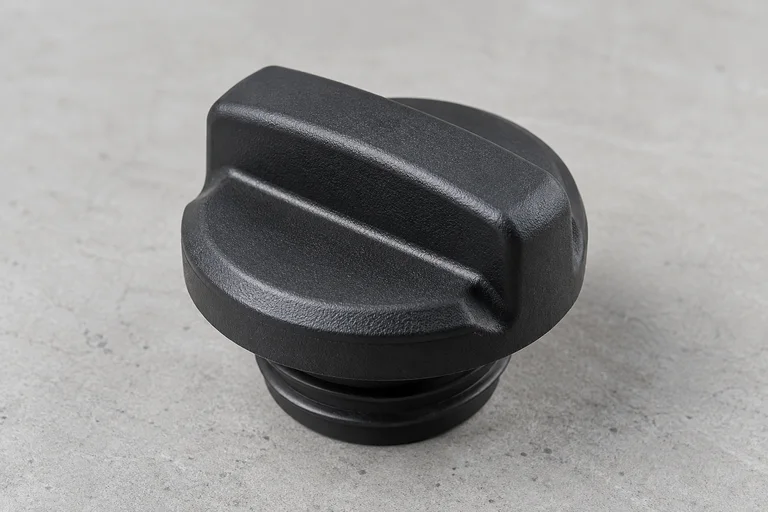
Look up the owner procedure for the actual fuel-filler design. If the vehicle has a cap, follow its seating and inspection instructions. A capless system requires different guidance.
Tell the technician if the warning followed refuelling, body repairs or other work near fuel-system components. Report the timing as an observation rather than a diagnosis.
A documented cause is still model-specific
GM bulletin 23-NA-073 includes P0455 among EVAP faults associated with dust entering the canister and vent system on listed pickup applications. It excludes ZW9 cab-and-chassis vehicles and is tied to the bulletin’s usage and application conditions.
A dusty vehicle with P0455 is not automatically covered. Current service information must confirm the match before that repair path is used.
Understand what the EVAP test can establish
EVAP is the vehicle’s evaporative-emissions system. The large-leak label belongs to a test of that system, rather than a visual measurement made by the scanner. The code does not tell you that liquid fuel is pouring from a particular point, and the absence of visible liquid does not disprove an EVAP fault.
Ford’s documented monitor evaluates a pressure response under defined conditions. Its result depends on the system and test being ready to operate. This explains why a technician needs the full diagnostic procedure rather than a list of parts commonly mentioned beside P0455 online.
An actual fuel smell or visible leak is separate information that should be reported promptly. Do not use the word “vapour” in the code description as reassurance that every fuel-related symptom is harmless. Keep ignition sources away and arrange professional help for an apparent fuel leak; do not dismantle the system to locate it yourself.
What a useful diagnostic estimate should explain
Before approving a repair, ask the workshop to connect its proposed work to an observed finding. Useful questions include:
- Which part of the vehicle-specific test failed?
- Was a leak or restriction located, or is further diagnosis still needed?
- Does a service bulletin apply to this VIN, engine and operating history?
- How will the same condition be checked after the repair?
These questions leave room for the technician to investigate without treating every named EVAP component as suspect. A cap inspection may be appropriate on a capped filler, but a replacement recommendation still needs a reason beyond the presence of P0455.
For the GM example, give the workshop an accurate account of dusty-road use. The bulletin describes an extreme operating environment on its listed vehicles. Occasional dust on bodywork is not the same evidence, and the bulletin should not be used to prescribe canister work on an unrelated car.
Why the lamp may not give an immediate answer
Ford lists fuel-level, temperature and operating conditions for its EVAP monitoring. A short journey after a repair may therefore leave the monitor incomplete. “No code currently displayed” and “the relevant test completed successfully” answer different questions.
Ask which result has actually been obtained and whether any verification remains outstanding. Avoid adding fuel, disconnecting the battery or following an arbitrary driving routine simply to force the light off. Use the completion procedure for the actual vehicle.
Ask for a verified repair, not a cleared light
Request an explanation of the test finding and the evidence that it changed after the repair. Keep that information with the scan record.
If the warning returns, provide the earlier repair details rather than starting again with a different guessed component. Fuel-vapour system testing needs the correct equipment and vehicle procedure.
Frequently asked questions
Is P0455 always a loose cap?
No. The monitor result does not locate the fault, and some vehicles do not use a removable cap.
Can a dust-related bulletin apply to any pickup?
No. Check the listed model, configuration, usage conditions and current manufacturer information.
Does clearing P0455 prove the problem is fixed?
No. Ask for the verification that demonstrates the relevant system is operating correctly.
Check the original documents
Sources
- Ford/Lincoln 2024–2025 gasoline OBD operation summary, revision July 16, 2024, printed pages 12–15
P0455 large-leak monitor definition
- GM bulletin 23-NA-073, revised March 13, 2025, application table and dust condition, pages 1–2
Dust-related faults on listed Silverado/Sierra applications, severe-dust condition and ZW9 exclusion
Sources checked on 2026-10-25. Follow the instructions for your exact model.