
P0641 Code: Sensor Reference Voltage and Checks Before Repair
Contents
P0641 points to a sensor reference-voltage circuit. The full scan description and vehicle details help distinguish a wiring fault from a component affecting the supply; the code alone does not identify the repair.
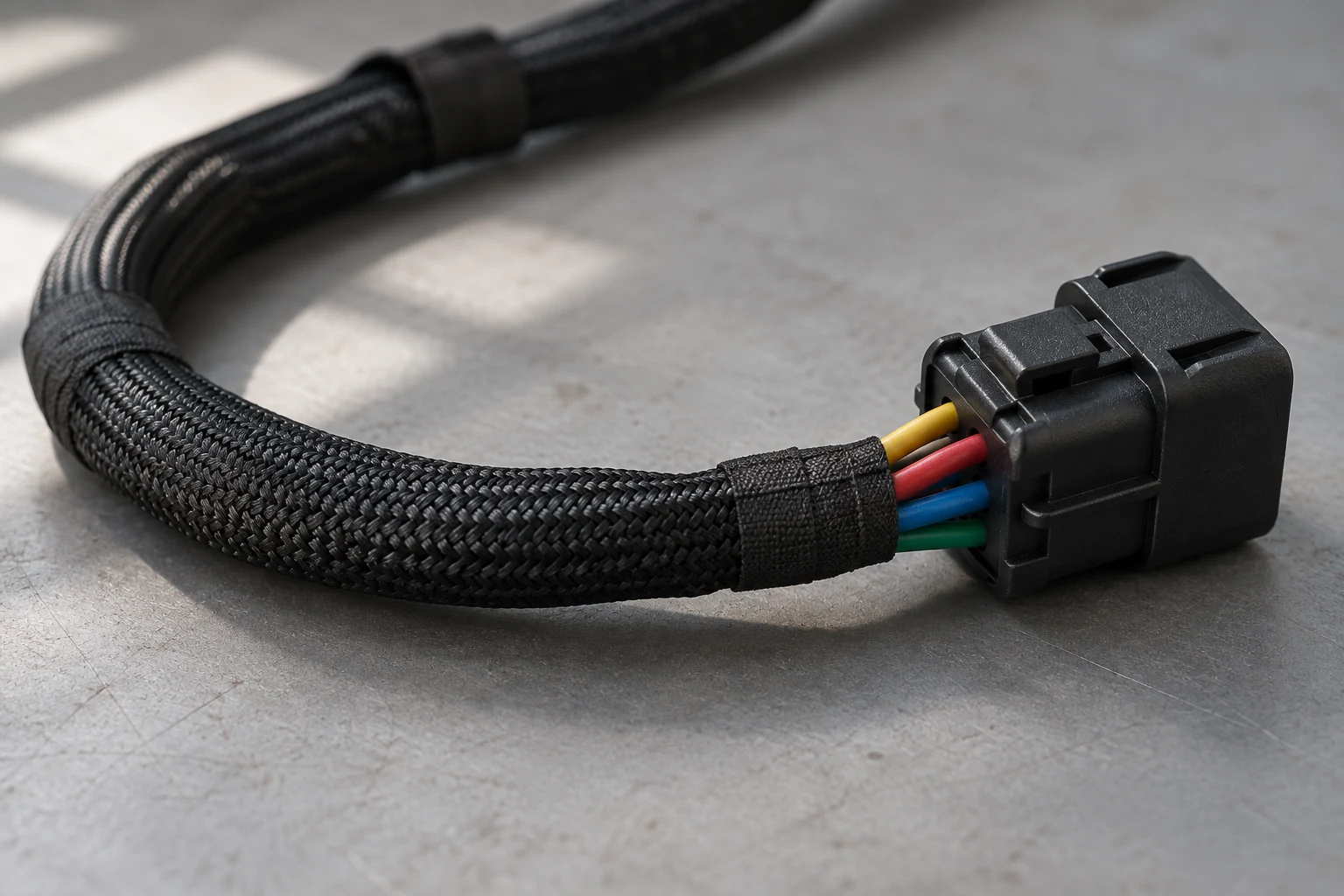
Engine reference-voltage orientation, with separate Ford 2024–2025 gasoline OBD examples and historical GM examples: 2018–2020 Trax 1.4L LUV (18-NA-114, November 2020) and North American 2016–2017 Camaro 3.6L LGX subset (PIP5444, November 2016). Not universal component locations or voltage-test specifications.
Stop safely and seek assistance for stalling or unsafe power loss. Follow engine shut-off and oil-pressure warnings. Do not probe, bridge or power reference-circuit terminals, disconnect sensors at random or open fuel-system components; qualified diagnosis is required.
Read the full code, not just P0641
P0641 concerns a sensor reference-voltage circuit. In the engine systems discussed below, that is a 5-volt circuit, but the exact description and test procedure must come from the vehicle's service information. A short scanner label is not enough to select a sensor or control module for replacement.
Keep any characters shown after the five-character code. Ford's 2024–2025 gasoline OBD summary lists P0641_16 for reference-voltage A circuit low and P0641_17 for circuit high. It also lists P0641_1C for range/performance on the specified Bosch Tricore modules. Those suffixes distinguish conditions that need different investigation; they should not be discarded when sending a scan report to a workshop.
The letter A identifies the reference circuit in that diagnostic description. Use the wiring information for the exact engine to establish which components belong to it, rather than treating A as a universal sensor location.
A wiring problem and a sensor problem can lead to different repairs
Two GM documents show why the vehicle details matter. They describe specific historical conditions, not the likelihood of a fault on every car with P0641.
GM bulletin 18-NA-114, revised November 2020, covers 2018–2020 Chevrolet Trax vehicles with the 1.4L LUV engine in its listed markets, including North America. It identifies engine-harness contact with the G100 ground stud as a possible source of wire damage. P0641 is among the possible codes; the instructed repair follows confirmation and inspection of the affected harness.
The same bulletin lists several possible dashboard warnings and communication codes. It explicitly notes that the listed components belong to different circuits and that more than one circuit is unlikely to be affected by that chafing condition. Do not interpret the list as a set of symptoms that must all occur together.
GM bulletin PIP5444, November 2016, describes another cause: an internally shorted fuel rail pressure sensor pulling the 5V1 reference line low. Its North American scope includes 2016–2017 Chevrolet Camaro models with the 3.6L LGX engine and other specifically listed GM applications. Loss of power or stalling may accompany P0641 and other codes.
In that procedure, the technician first establishes whether the sensor is responsible for the low reference voltage. Replacement follows confirmation of an internal short. The document does not justify replacing a fuel-pressure sensor on an unrelated vehicle or using the Trax wiring repair on a Camaro.
Treat driving symptoms as the immediate priority
If the engine stalls or power drops enough to make driving unsafe, stop safely and arrange assistance. Follow any instruction to shut off the engine. An oil-pressure warning must not be dismissed as an electrical side effect merely because one service bulletin mentions it.
If only the check-engine light is present, record it and seek vehicle-specific advice promptly. P0641 by itself cannot establish a safe driving distance. The operating symptoms and the manufacturer's warning instructions matter more than an online guess about how far the car will travel.
Prepare a useful report for the workshop
Save the available information before clearing the fault memory. Include:
- The full code and description, any suffix, and the module that reported it.
- All accompanying codes, their stored or pending status, and available freeze-frame data.
- The model year, engine identification and VIN for checking service-document applicability.
- Whether the warning appeared at start-up, while driving or after recent work.
- The sequence of dashboard messages and any loss of power or stalling.
If the report also contains a named sensor code such as P0340, a camshaft-position circuit code, keep it in the report. Ask the technician to check whether the codes are related on that engine; their simultaneous presence is not proof of a shared cause.
Ask what the circuit tests established
A useful repair explanation identifies the affected circuit and the evidence behind the recommendation. Ask whether inspection found damaged wiring, whether testing isolated a component, and which current service procedure was followed. For intermittent faults, provide the conditions under which the warning returns instead of agreeing to a sequence of speculative part replacements.
Do not disconnect engine sensors at random, bridge connector terminals or apply battery voltage to a reference circuit. Leave electrical isolation and any fuel-system work to a qualified repairer using the correct diagram and equipment. The older bulletins linked above should be checked against current information and the vehicle's VIN before work is authorised.
Frequently asked questions
Is P0641 the same as a low battery code?
Do not use P0641 as a battery-replacement diagnosis. The cited engine documents concern a sensor reference circuit; ask the repairer to explain the actual scan description and any separate supply-voltage faults.
Can I find the faulty wire from its colour?
A wire colour or photograph from another vehicle is not a reliable identification method. The correct circuit diagram and connector information must match the vehicle and engine.
What if the warning disappears before the appointment?
Keep the appointment details and saved scan report. Explain when the warning stopped and whether it has returned before. A workshop can use that history when deciding how to investigate an intermittent complaint.
Check the original documents
Sources
- Ford 2024–2025 gasoline OBD summary V2, July 16 2024
Pages 129–130: 5V reference A codes and suffixes 16,17,1C; module-specific distinctions, not universal test thresholds.
- GM 18-NA-114, November 2020
Pages 1–3: 2018–2020 Trax 1.4L LUV and listed markets; G100 stud harness chafing, different-circuit caveat and conditional inspection/repair.
- GM PIP5444, November 2016
Pages 1–2: North American exact model/engine list including 2016–2017 Camaro 3.6L LGX; internally shorted rail-pressure sensor lowers 5V1, confirmation precedes replacement; professional procedure.
Sources checked on 2026-11-10. Follow the instructions for your exact model.