LG Washer FE Code: Overfill Warning and Safe Next Steps
Contents
LG FE is an overfill warning. Stop if water is escaping and use the exact model instructions before restarting or opening a drain filter.
LG front-load and WashTower washer FE warnings. Causes and permitted restart or maintenance steps differ by family; not a universal inlet-valve diagnosis.
If water is escaping, stop operation and close the supply if safely accessible. Do not touch electrical connections from a wet area. Let retained water cool before any permitted drain maintenance.
FE is an overfill warning
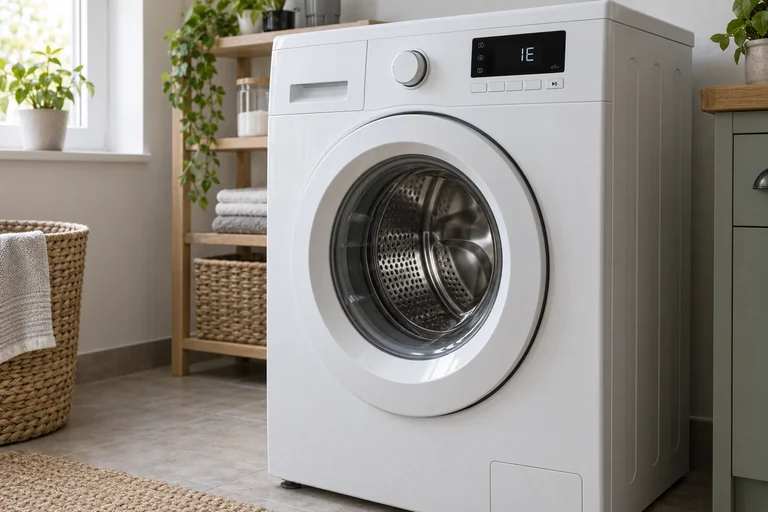
An LG washer FE code indicates an excessive water-level condition. It needs a different response from a washer that is simply taking too long to fill. Confirm the letters on the display before following advice for IE, OE or another message with a similar appearance.
LG's front-load error reference and WashTower support page discuss FE under their respective appliance families. They do not turn the code into proof that an inlet valve must be replaced. The reported water level and the way the appliance senses it both need appropriate investigation.
Deal with overflowing or leaking water first
If the washer is overflowing, leaking or continuing to admit water unexpectedly, stop the cycle and close the supply taps if you can reach them safely. Disconnect power only from a safe, dry position. Do not stand in water to handle a plug or move the washer to reach a socket.
Keep the door closed while water is retained behind it. Opening a pump filter or door to release a full drum can cause a sudden spill. Follow the exact manual's emergency-draining instructions if owner draining is permitted, and allow hot water to cool first. If the route is unclear or unsafe, arrange assistance.
Check what happened before the warning
Think back to the start of the load. LG specifically asks whether water was added through the dispenser. Do not add water manually to make the machine finish; that can complicate an overfill situation. If water was added, tell support how and when, without starting another cycle to recreate it.
For WashTower models, LG also discusses excessive detergent and suds in its FE guidance. Report the product and amount used and whether substantial foam was visible. These are relevant observations, not a reason to assume that every FE is caused by detergent.
- Photograph the FE display and record the programme.
- Note whether water is visibly high, whether foam is present and whether any water escaped.
- Record any manual addition of water or recent detergent change.
- Say whether the washer drained after stopping or retained water.
Use the restart instructions for the correct family
The front-load support page describes a specific restart route that includes an initial drain check. That route should not be applied casually to an actively overflowing machine or to a different appliance family. Secure an unsafe situation first, then use the instructions matching the model.
A restart is an observation, not a component test. If FE returns, or the expected draining step does not occur, stop the attempt and contact service. Repeating resets while ignoring retained water gives little useful evidence and can leave the original problem unresolved.
Why drainage and water-level sensing matter
LG's WashTower explanation includes drainage restrictions and water-level sensing as possible parts of the investigation. This is why a technician may ask about both filling and draining instead of immediately ordering an inlet valve. The code alone does not distinguish the possibilities.
If a separate LG OE drainage warning appears, record it alongside FE. Do not substitute the OE maintenance procedure for FE diagnosis. Owner-accessible filter maintenance, where the manual permits it, also requires the correct draining preparation; it is not a universal first action on a full, hot drum.
Prepare a useful service request
Include the full model number, whether the appliance is a standalone front-loader or a WashTower, and the sequence of events. A short statement such as “FE appeared during filling; foam was visible; water remained after stopping” is more useful than naming a presumed failed part.
Ask the service provider what establishes an actual overfill, a sensing problem or a drainage-related condition in your appliance. If a replacement is proposed, request the supporting finding and confirmation that the part matches the model. Keep the work record and ask how normal filling and draining were verified afterward. The aim is to resolve the cause of the warning, not merely obtain a blank display after a reset.
Frequently asked questions
Does FE always mean a failed inlet valve?
No. LG’s WashTower guidance describes several routes to an excessive or incorrectly detected water level.
Is FE the same as IE?
No. FE is an overfill warning; IE concerns the incoming water supply. Confirm the letters on the display.
Should I pour water in to finish the cycle?
No. Added water can complicate an overfill condition. Follow the model-specific support instructions.
Check the original documents
Sources
- LG USA: Front load error list, FE/PE/tE sections
FE overfill and additional water; model-specific restart path
- LG USA: WashTower error codes
Suds, sensing and drain restrictions; retained-water caution
Sources checked on 2026-10-25. Follow the instructions for your exact model.
Compare the available guides: LG washer error codes.