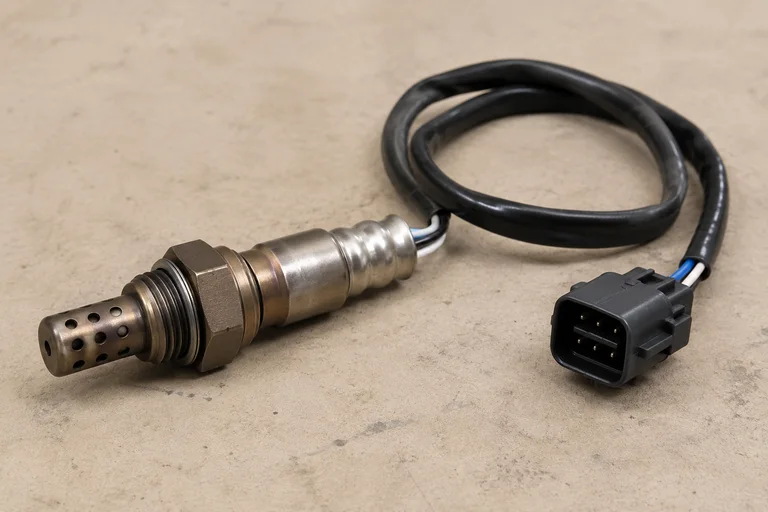
P0133 Code: Slow Oxygen Sensor Response on Bank 1
Contents
P0133 reports slow oxygen-sensor response on bank 1 sensor 1. Confirm engine-specific tests and applicable software before replacing the sensor.
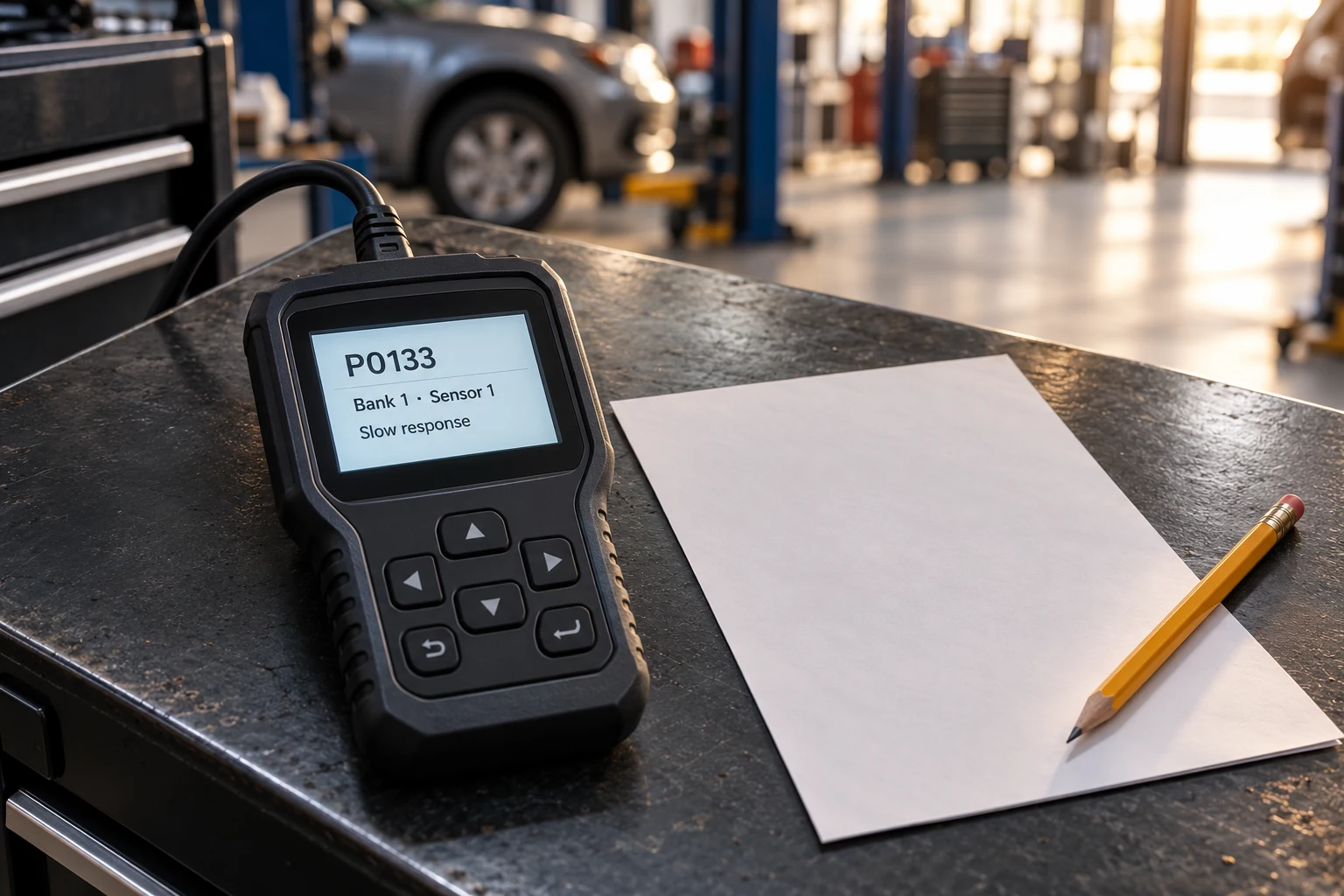
OBD-II P0133 overview. Audi A3 descriptions and the 2019 Jetta DGXA/DJXA software example do not establish universal response thresholds.
Keep clear of hot exhaust parts. Do not remove sensors or work under a vehicle without the correct safe service procedure and support equipment.
P0133 reports slow oxygen-sensor response
P0133 describes slow response in the oxygen-sensor circuit identified as Bank 1 Sensor 1. The Audi A3 diagnostic-code reference lists that description separately from P0135, which concerns the heater circuit. Similar numbers do not make the two tests or repair paths equivalent.
The word slow describes the monitored response, not a confirmed reason for it. A sensor replacement may be proposed after diagnosis, but the code alone does not establish that the sensor is worn out. The vehicle's procedure must determine what produced the result.
Identify the engine and sensor before comparing data
Bank and sensor labels need to be matched to the manufacturer's layout. Do not use a photograph of another engine to decide which connector to disconnect or which physical side of the vehicle to inspect. Provide the workshop with the exact engine information as well as the model year.
Likewise, a generic switching-time figure or voltage trace should not be used as a universal pass-or-fail test. The sensor system, operating conditions and manufacturer limits matter. A screenshot of a reading without those details cannot establish whether the response meets the applicable specification.
A Volkswagen software example has a narrow scope
Volkswagen bulletin 01-21-04 lists P0133 among codes addressed in an engine-control software update for specified 2019 Jetta vehicles with the 1.4-litre DGXA or DJXA engine. This is an example of why applicable service information should be reviewed before choosing a part.
It is not evidence that every slow-response code requires an update or that any Jetta engine is covered. The current vehicle identification and software applicability must be checked by the appropriate service provider. A matching code does not tell an owner which version is installed or whether the listed condition exists.
Preserve the complete diagnostic picture
Save all codes, descriptions and statuses before clearing anything. If freeze-frame data is available, include it with the report. Tell the workshop whether the warning followed exhaust, sensor or engine work and whether the vehicle's behaviour changed.
- Record whether the engine starts, idles and drives as usual.
- Note any additional warning lights or intermittent symptoms.
- Keep invoices for relevant previous repairs and the dates they occurred.
- Explain any earlier code clearing or component replacement.
Do not assume that the absence of an obvious driving symptom makes the stored result irrelevant. Equally, do not describe rough running as a guaranteed P0133 symptom if your vehicle does not have it. The most useful history is specific to what happened on your car.
Keep response, heater and catalyst findings distinct
P0133 and P0135 address different monitored aspects of the sensor system. A P0420 catalyst-efficiency result is different again. If more than one appears, retain the combination for the technician rather than choosing one label and discarding the others.
This distinction also prevents an unsupported converter replacement. A code mentioning an oxygen sensor does not independently establish the condition of the catalytic converter, and a sensor-related description does not test its wiring for you. The diagnosis needs to explain which finding led to the proposed work.
Avoid replacing or cleaning parts as an experiment
Do not remove a hot sensor or reach around hot exhaust components to inspect it. Avoid applying chemicals, feeding power into connectors or copying test connections from an unrelated engine. Access and test specifications must come from matching service information.
If a sensor is recommended, ask how the test result identified it and how the replacement application was confirmed. If a software action is proposed, ask which current service instruction applies. The answer should be more specific than “the scanner named that part.”
Check the repair against the original condition
Request the before-and-after diagnostic record and an explanation of the verification performed. If the warning returns, note how long afterward and under what conditions rather than assuming that the new component has failed. That comparison can guide further investigation.
P0133 alone cannot establish a safe driving distance. Unsafe running or additional urgent warnings need prompt, vehicle-specific attention. Keep the focus on a supported diagnosis and an explained result, rather than repeatedly erasing the code or replacing another part without new evidence.
Frequently asked questions
Is P0133 identical to P0135?
No. P0133 concerns response; P0135 concerns the heater circuit.
Does slow response prove the sensor is worn out?
The code alone does not establish the cause. Use the engine-specific diagnostic procedure.
Are switching-time limits universal?
No. The applicable sensor system and manufacturer test conditions determine the limits.
Check the original documents
Sources
- 2013 Audi A3 Quick Reference Specification Book, printed page 130
P0133/P0135 distinct response/heater descriptions
- Volkswagen 01-21-04 / 2061991/2, March 1, 2021
Scoped Jetta software example
Sources checked on 2026-10-25. Follow the instructions for your exact model.