P0138 Code: High O2 Sensor Voltage and What to Check
Contents
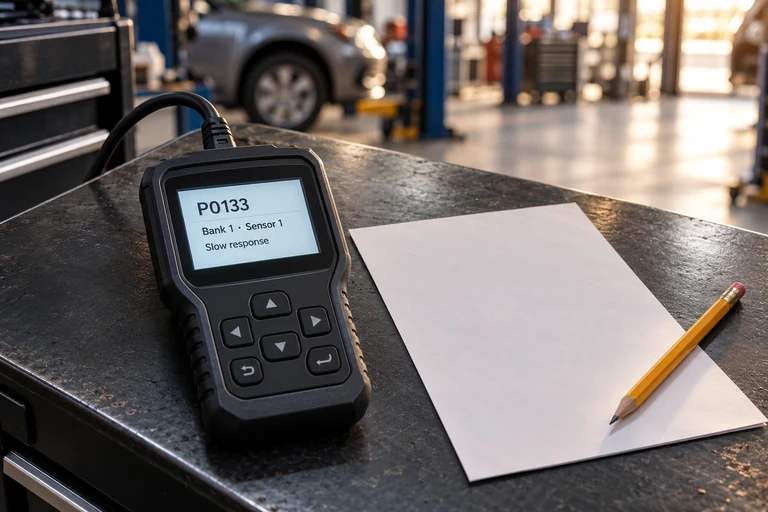
P0138 means the Bank 1 Sensor 2 oxygen-sensor circuit has reported high voltage. Check the signal, wiring and vehicle-specific service information before replacing parts.

OBD-II vehicles reporting P0138. General interpretation with explicitly scoped US Ford and Toyota examples; exact engine, emissions specification and current service information govern diagnosis.
Do not touch hot exhaust parts or work beneath an unsupported vehicle. Electrical and underbody checks require suitable equipment. A flashing warning or severe rough running needs urgent assessment; no safe driving distance is assumed.
What the high-voltage warning means
The engine computer is reporting a signal outside its expected limits, not naming a replacement part.
Ford's gasoline OBD documentation describes a rear-sensor overvoltage monitor and identifies a short from heater or battery power into the signal line as a possible explanation on the covered systems. Its voltage and timing limits belong to that application; do not use them as universal test specifications.
A rich exhaust reading and an electrical overvoltage fault are not interchangeable diagnoses. The technician needs the vehicle's test procedure and the conditions recorded when the code appeared.
Identify Bank 1 Sensor 2 before ordering anything
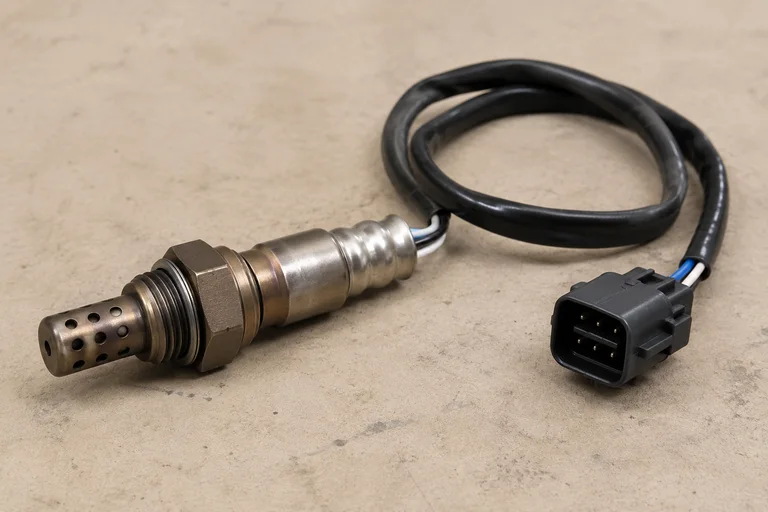
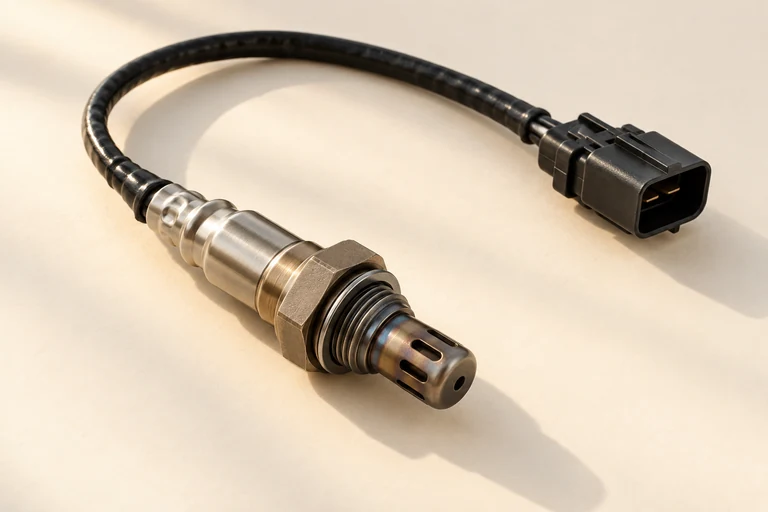
Bank 1 generally contains cylinder No. 1. Sensor 2 is usually downstream of the catalyst. Bosch's location guidance notes an exception: with three sensors per bank, Sensor 2 can be on the catalyst and Sensor 3 after it.
Do not choose a component simply because an online photograph calls it the left or right sensor. Match the year, engine and emissions specification to the manufacturer's location diagram. A wiring connector elsewhere on the harness may also need inspection; the code does not establish that the sensor body itself is defective.
Two examples that change the diagnostic route
On some 2020 Ford F-Super Duty trucks with the 6.2L or 7.3L engine, built on or before 5 June 2020, bulletin 20-2380 links a group of oxygen-sensor codes, including P0138, to water entering specified transmission-harness connectors. That is a narrowly defined harness concern, not a reason to replace a sensor on every Ford.
Toyota bulletin T-SB-0001-10 Rev1 gives a different example. For its listed US applications, including 2005-2010 Avalon models with the 2GR-FE engine, particular combinations of upstream air/fuel and downstream oxygen-sensor data can point to the upstream air/fuel sensor. Other results lead to circuit checks. Companion codes such as P2195 or P0606 change the diagnostic branch.
These examples make checking applicable service information worthwhile. A workshop should confirm the vehicle identification and any newer or more specific bulletin before following an older procedure.
What to record before the appointment
Keep the complete scan report and freeze-frame data before clearing anything. Bosch explains that erasing codes also removes stored freeze-frame information. Toyota's procedure uses that stored snapshot, so an early reset can remove evidence needed to choose the next test.
- Record every code, including pending codes, rather than photographing P0138 alone.
- Note whether the warning appeared at a cold start, after warming up or during a particular journey.
- Tell the workshop about recent exhaust, sensor or wiring work, and whether the symptom changed afterward.
- Describe rough running, loss of power or a flashing warning lamp separately from the code number.
Leave hot exhaust components, underbody access and electrical probing to someone equipped for those checks. Do not bridge sensor terminals or attempt an internet pin test without the correct wiring information.
Can you drive with P0138?
The code alone cannot establish a safe driving distance. With a steady warning and no obvious symptoms, arrange diagnosis promptly and follow the vehicle's handbook.
A flashing engine warning or severe rough running needs more urgent attention. Ford's Super Duty handbook warns that a flashing lamp can indicate misfire with a risk of catalyst damage and calls for immediate service while avoiding heavy acceleration or deceleration. If the vehicle is running badly, stop somewhere safe and seek roadside advice rather than continuing a test drive. Separate misfire warning guidance explains that symptom pattern.
Confirm the repair against the original fault
Ask what the tests found: a damaged connection, an abnormal sensor signal or another condition identified by the applicable procedure. A parts list alone does not explain the diagnosis.
DENSO's diagnostic approach includes recording test results and checking the repair under the conditions that produced the complaint. The final check should confirm that the fault no longer returns when the relevant monitor runs. Simply erasing P0138 and seeing the lamp go out is not that confirmation.
Frequently asked questions
Does P0138 mean the catalytic converter has failed?
No. P0138 describes the oxygen-sensor circuit signal. It is not, by itself, a catalyst-efficiency diagnosis or a reason to replace the converter.
Can P0138 be present without noticeable symptoms?
Yes. An emissions fault can illuminate the engine warning even when the vehicle seems to run normally. A persistent warning still needs diagnosis.
Will resetting the code make the car ready for an emissions test?
Not necessarily. A warning lamp that is off does not establish that the OBD monitors have completed their checks. Have readiness status checked against the local inspection requirements.
Check the original documents
Sources
- Ford 2013 MY gasoline OBD system operation
Rear HO2S overvoltage monitor P0138; power/heater short to signal; signal monitor distinct from catalyst efficiency.
- Toyota T-SB-0001-10 Rev1
Other codes and freeze-frame values change diagnosis; upstream A/F response can cause P0138; inspect circuit for opens/shorts/high resistance; check more specific bulletins first.
- Ford TSB 20-2380
Water intrusion in listed HO2S transmission-harness connectors can cause P0138 among listed codes. Not generalized to all Ford or all P0138 faults.
- Ford 2013 Super Duty owner handbook
Blinking lamp/misfire urgency and catalyst risk; persistent emissions fault may lack obvious symptoms; monitor readiness is separate from lamp status.
- DENSO O2 and A/F Sensor Troubleshooting
Identify cylinder1 for bank1; rear sensor2 after catalyst in inline example; systematic diagnosis, TSB check, record findings and reproduce original conditions to confirm repair.
- Bosch Oxygen Sensor Tech Tips
Bank1 generally cylinder1; Sensor2 usually downstream but can be on catalyst when three sensors per bank.
- Bosch OBD1200 user guide
Erasing codes removes freeze frame; evidence preservation; electrical, exhaust heat and safe vehicle support precautions.
Sources checked on 2026-10-29. Follow the instructions for your exact model.