
P0135 Code: Bank 1 Sensor 1 Heater Circuit
Contents
P0135 concerns the bank 1 sensor 1 oxygen-sensor heater circuit. Check the engine’s wiring and service information before ordering a sensor.
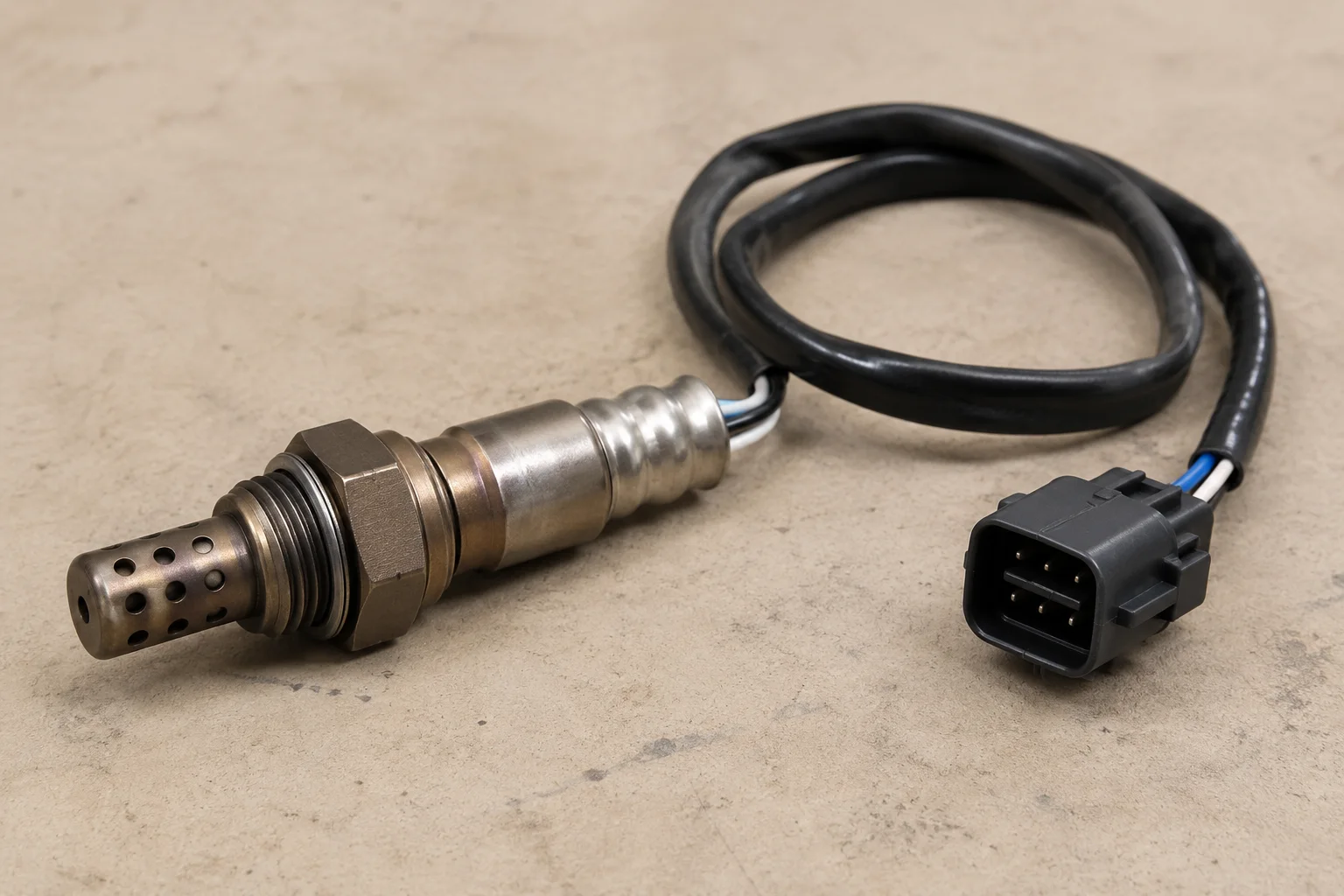
OBD-II P0135 overview. VW software example is restricted to 2019 Jetta 1.4T DGXA/DJXA; sensor position and tests require exact-engine information.
Exhaust components can stay hot after shutdown. Do not work under an unsupported vehicle or test powered wiring without the correct professional procedure.
P0135 concerns the heater circuit, not catalyst efficiency
P0135 identifies a heater-circuit fault associated with Bank 1 Sensor 1. The heater description matters: it is a different diagnostic result from a slow sensor response or a catalyst-efficiency warning. Preserve the full scanner wording so that the workshop does not have to infer which result was stored.
Do not order a catalytic converter from this code. A P0420 catalyst-efficiency result addresses a different monitored function. If more than one code is present, the combination needs interpretation through the engine's diagnostic procedure rather than separate guesses at parts.
Confirm the sensor identification on the actual engine
Bank and sensor labels identify a position within the manufacturer's system. Before any work, the service information must establish which sensor the code refers to on that engine. A photograph of a different engine bay is not sufficient to identify the connector or physical side of your vehicle.
Ask the workshop to include the engine identification and sensor designation in its explanation. This is especially useful when a parts catalogue offers several oxygen sensors that look similar. A matching plug shape or broadly compatible vehicle listing does not replace confirmation of the correct application.
A Volkswagen example where software is relevant
Volkswagen bulletin 01-21-04, dated March 1, 2021, describes an engine-control software update for specified 2019 Jetta vehicles with the 1.4-litre DGXA or DJXA engine. Its listed codes include P0135 and P0133.
The value of this example is its application limit. It shows why service information should be checked before assuming that the sensor itself needs replacement. It does not mean that all heater-circuit codes are software faults or that an update for a Jetta can be applied to another vehicle.
Have the service provider confirm the current bulletin, engine and software applicability. A historical document can explain a diagnostic route, but the code alone cannot tell an owner which software version is installed or whether that specific route is appropriate.
Save the scan results before changing anything
Record all codes and their displayed statuses, not only P0135. If the tool provides freeze-frame information, keep it with the report. Describe whether the warning appeared from a cold start, after other work or during normal use, without assuming that timing proves the cause.
- Give the workshop the model year, engine and relevant repair history.
- Mention any recent exhaust, wiring or sensor work.
- Record abnormal running or other warning lights separately.
- Keep the original scan report even if a later scan shows fewer codes.
Do not repeatedly clear the result to keep the light off. If you already cleared it, report when and whether it returned. That information helps distinguish a fresh observation from a code history whose earlier evidence has been removed.
Why generic electrical tests can mislead
A heater-circuit test requires the correct wiring information, connector identification and manufacturer specifications. Do not apply a resistance target from an unrelated sensor or feed battery voltage into a connector based on wire colour. The required test method cannot be established from P0135 alone.
Exhaust components can also remain hot after the engine is stopped. Avoid reaching around them to locate a sensor for a photograph or disconnect a plug. Leave under-vehicle access and circuit testing to someone with suitable equipment and the correct procedure.
Assess the repair on evidence
Ask which test or applicable service instruction supports the recommended work. For a sensor replacement, the explanation should distinguish the component from its surrounding circuit. For a software action, it should establish that the vehicle and installed version meet the requirements.
Afterward, ask how the original fault was verified as resolved and retain the report. P0135 alone cannot provide a safe driving distance; abnormal running, unsafe behaviour or additional urgent warnings need their own response. The repair should address the diagnosed condition, not merely remove the code from the reader for the moment.
Frequently asked questions
Does P0135 mean the catalytic converter needs replacing?
No. Its description concerns an oxygen-sensor heater circuit, not catalyst efficiency.
Are all oxygen-sensor resistance specifications the same?
Use the exact sensor and engine service specification; a generic value is insufficient.
Can a software update be relevant?
The cited VW bulletin documents a particular Jetta application. Confirm current applicability before using that path.
Check the original documents
Sources
- Volkswagen 01-21-04 / 2061991/2, March 1, 2021
P0135 heater description; scoped Jetta software-first instruction
Sources checked on 2026-10-25. Follow the instructions for your exact model.