P2096 Code: Post-Catalyst Lean Fuel Trim and Sensor Checks
Contents
P2096 means the post-catalyst fuel-trim system is reporting too lean on bank 1. Check the warning symptoms and the vehicle-specific diagnostic procedure before assuming an oxygen sensor needs replacement.
Vehicles reporting P2096. Subaru test examples are limited to the page 2 non-PHEV model groups in bulletin 18-228-25. Volkswagen software eligibility requires the listed VIN, CDVC engine, control module and software conditions; other vehicles need their own procedure.
Follow the exact owner manual for warning-light instructions. Stop safely and seek assistance for severe rough running or loss of power. Leave commanded mixture tests, circuit diagnosis and control-module programming to a qualified repairer.
What the code tells you
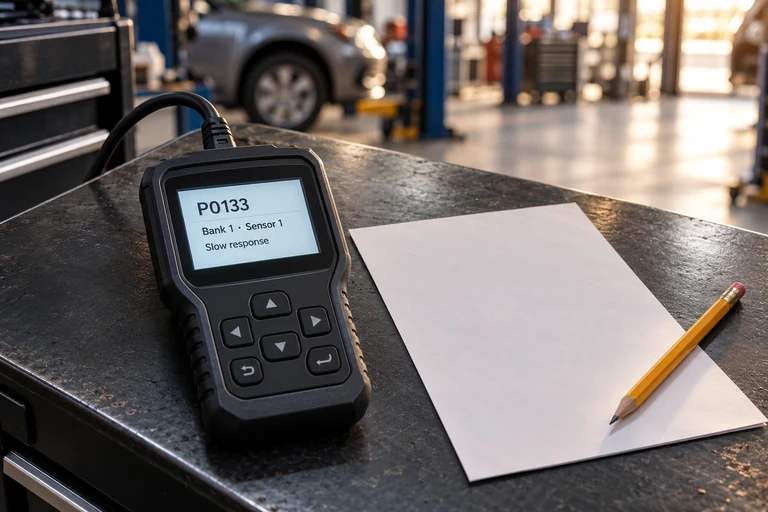
P2096 identifies a lean condition in the post-catalyst fuel-trim system on bank 1. The description names the monitored system; it does not establish which component needs replacement. Manufacturer instructions illustrate why the next step depends on the vehicle, not just those five characters.
Read the complete scan report before comparing repairs online. A result naming P0171, system too lean should not be silently substituted for P2096. Save both codes if both are present, rather than choosing whichever description sounds more familiar.
Decide how urgently to act
Start with the warning light and the vehicle's behaviour. A code lookup cannot establish a safe remaining driving distance.
For example, pages 97-98 of the 2022 Chevrolet Equinox owner's manual distinguish a steady malfunction light from a flashing one. Flashing can indicate a fault that could damage the emissions system; Chevrolet advises reducing speed and avoiding hard acceleration and uphill grades. If it continues, find a safe place to park. A steady light also requires diagnosis, even when the vehicle seems to run normally.
Use your own model's manual for the response to its warnings. If the engine runs severely rough or loses power, stop somewhere safe and seek assistance rather than taking a test drive to reproduce the code.
Why one oxygen-sensor reading is not a diagnosis
Subaru bulletin 18-228-25 corrects service-manual tests for P2096 and P2097. Its page 2 procedure covers non-PHEV Legacy/Outback 2.5-litre models from 2015-2025, Impreza/Crosstrek from 2017-2023, Forester from 2019-2024 and BRZ from 2022-2025.
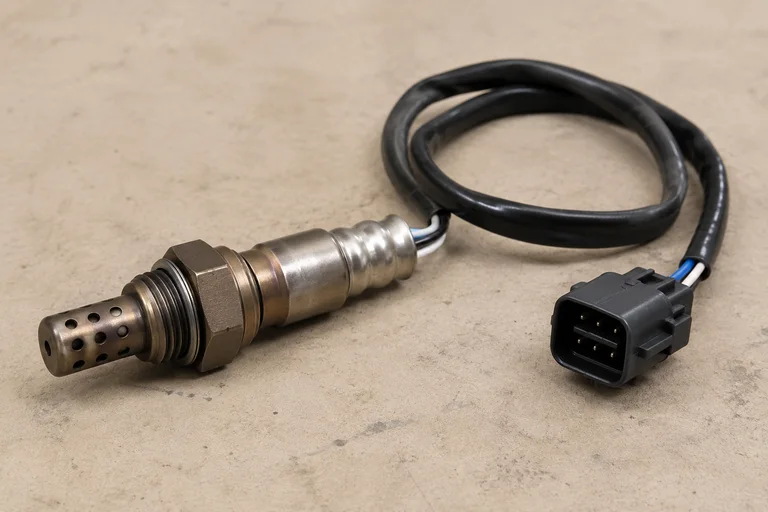
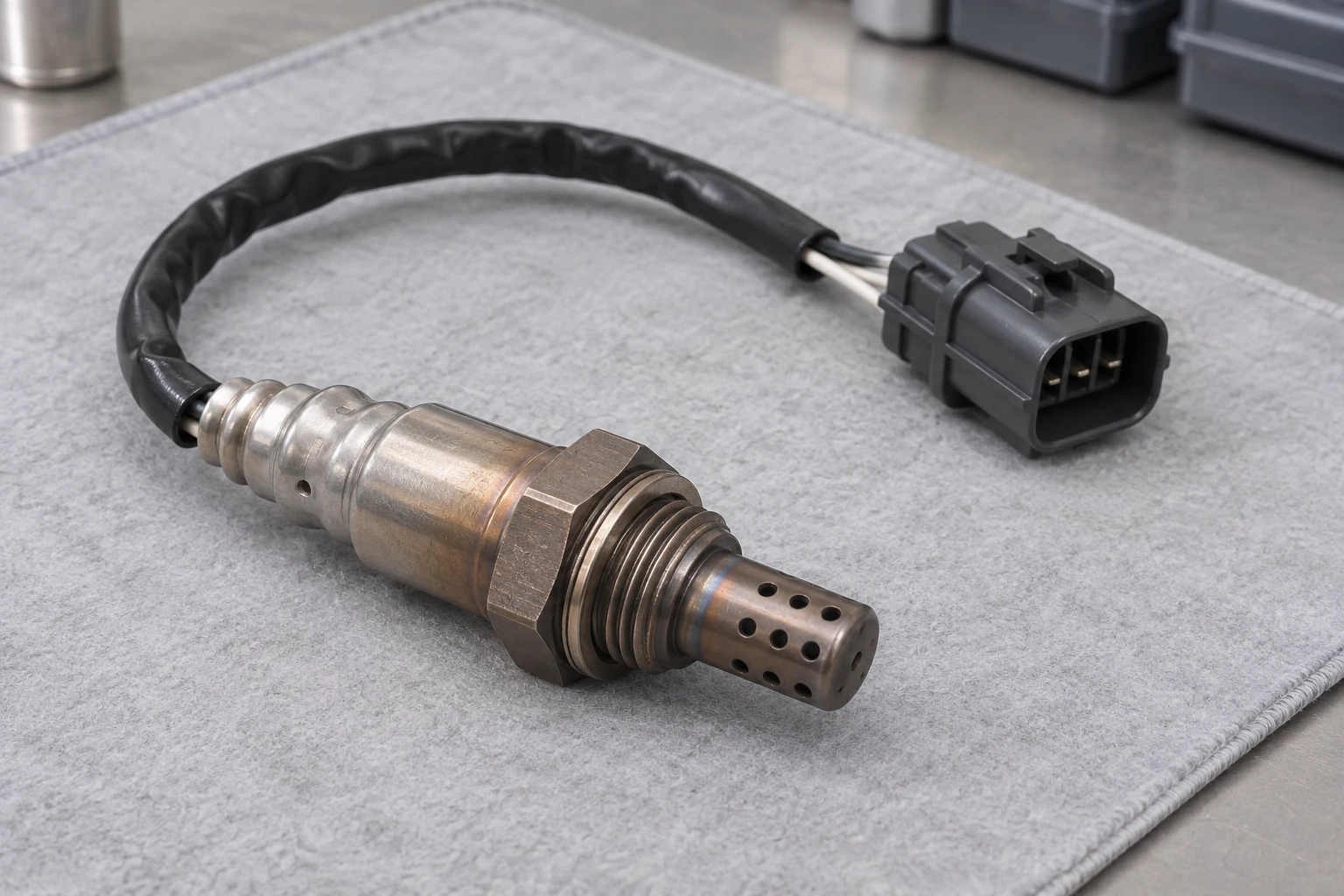
The revised checks assess rear oxygen-sensor response while a technician uses a scan tool to command mixture changes. That is different from declaring a sensor defective because of a single voltage snapshot. The bulletin has separate instructions for other listed model groups, so even closely related vehicles may require a different test sequence.
Ask whether the workshop is using the current procedure for your exact model. These are professional diagnostic tests, not instructions to adjust injection settings yourself or disconnect a sensor with the engine running.
When a software check changes the repair path
Volkswagen bulletin 01-21-05 describes fuel-trim faults that can be set incorrectly by engine-control software. For vehicles meeting its conditions, the specified update comes before component diagnosis or replacement.
For P2096, the software table includes particular 2020-2021 Atlas and Atlas Cross Sport configurations with the 3.6-litre CDVC engine. Eligibility depends on the VIN, control-module identity and installed software. The broader model list on the cover is not enough to establish that the P2096 correction applies.
Give the dealer your VIN and ask whether current service information calls for a software update. Do not assume that every Atlas, or another car displaying P2096, has the same software issue.
Prepare for a useful diagnosis
Bring information that helps the repairer separate what was observed from what has been guessed:
- The full scan report, including any other codes and the date it was saved.
- Whether the warning appeared at startup, after a warm journey or following recent work.
- Any previous sensor replacement or software-update invoice, so the earlier work can be checked rather than repeated automatically.
Before approving a repair, ask which finding supports it and how the workshop will confirm the fault is resolved. A parts estimate should follow the diagnostic findings; the code description alone is not a parts order.
Frequently asked questions
Are P2096, P2097 and P2098 the same fault?
No. The Volkswagen bulletin identifies P2096 as post-catalyst fuel trim too lean on bank 1, P2097 as too rich on bank 1, and P2098 as too lean on bank 2. Keep the exact code when requesting diagnosis.
What should I ask if an oxygen sensor has already been replaced?
Ask for the earlier test results and whether the current scan shows the same code. Request an explanation of what the next test will establish before authorising another part. Keep the previous invoice with the diagnostic report.
Check the original documents
Sources
- Subaru 18-228-25, November 2025
Pages 1-2: code definition, corrected rear-sensor tests and exact non-PHEV model scope.
- Volkswagen 01-21-05 / 2061777/1, February 2021
Pages 1-4: VIN and engine scope, fuel-trim code definitions, update-first requirement and software eligibility table.
- 2022 Chevrolet Equinox US owner manual
Printed pages 97-98: steady and flashing malfunction-light instructions, used as a model-specific safety example.
Sources checked on 2026-11-05. Follow the instructions for your exact model.